
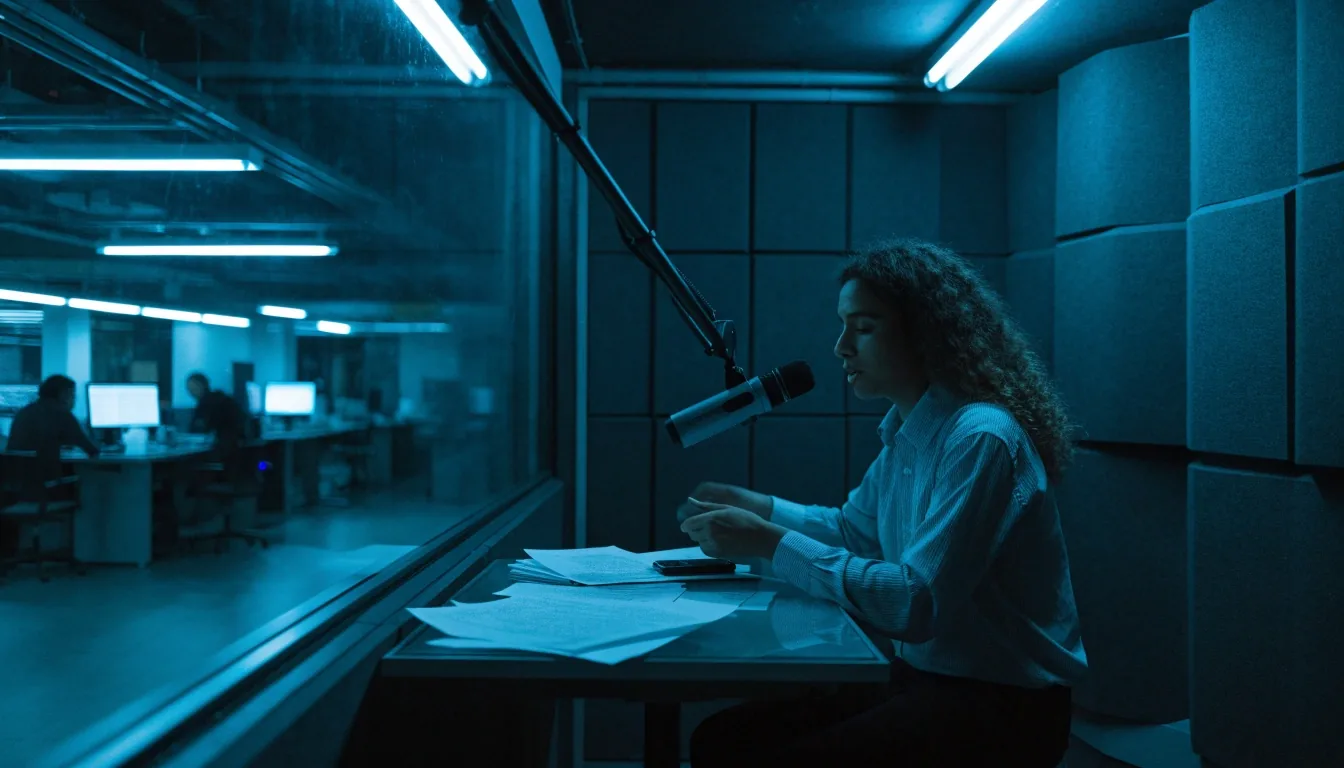
Radio and digital news in a CBC newsroom
CBC News is not only television. Radio One News and CBC's digital platforms sit inside the same newsrooms as TV, and they often work from the same reporting.
Radio still lives in the newsroom
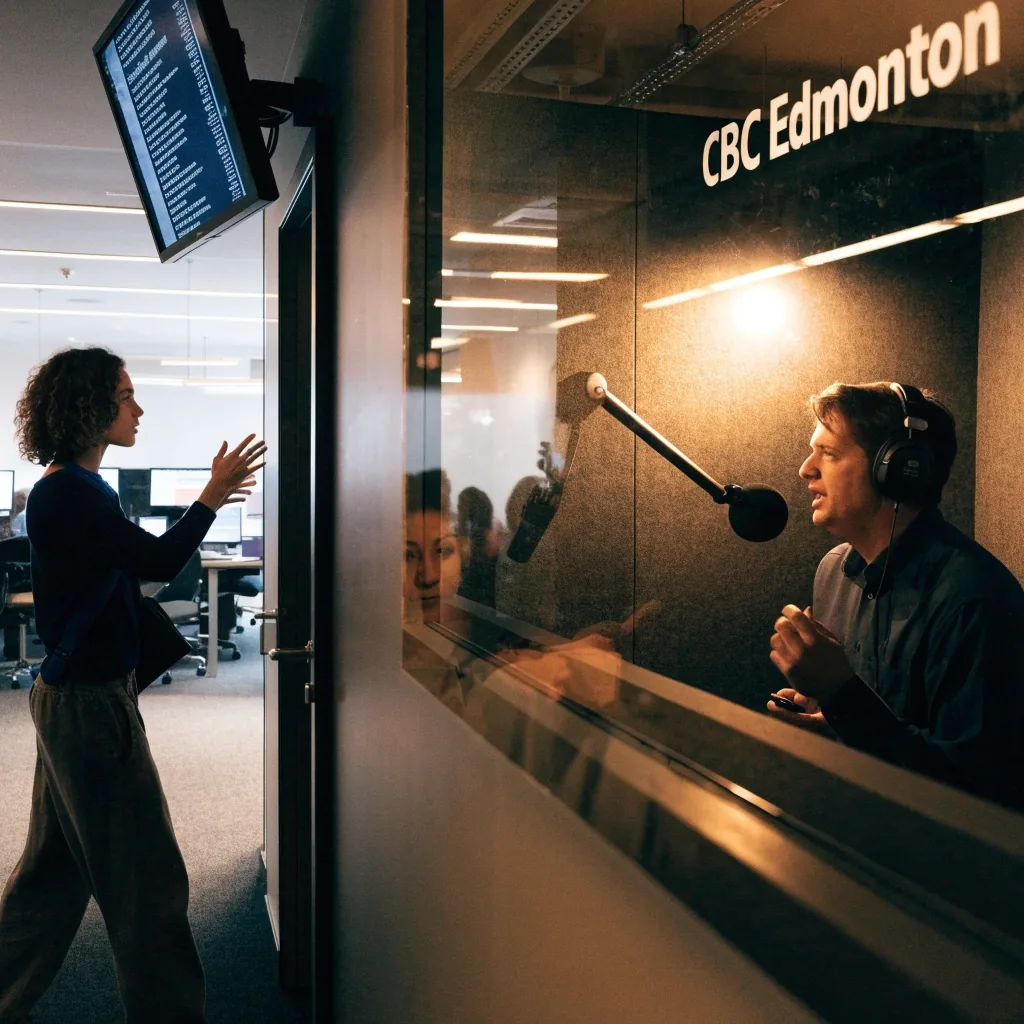
CBC's Toronto facilities page lists CBC Radio News among the programs housed at its Front Street building, and the Vancouver broadcast centre page says the newsroom there also includes radio booths. Radio is part of the integrated newsroom model rather than a separate operation down the street. A radio producer and a TV producer may be working from the same reporting, in the same building, on the same day.
What a radio booth is for
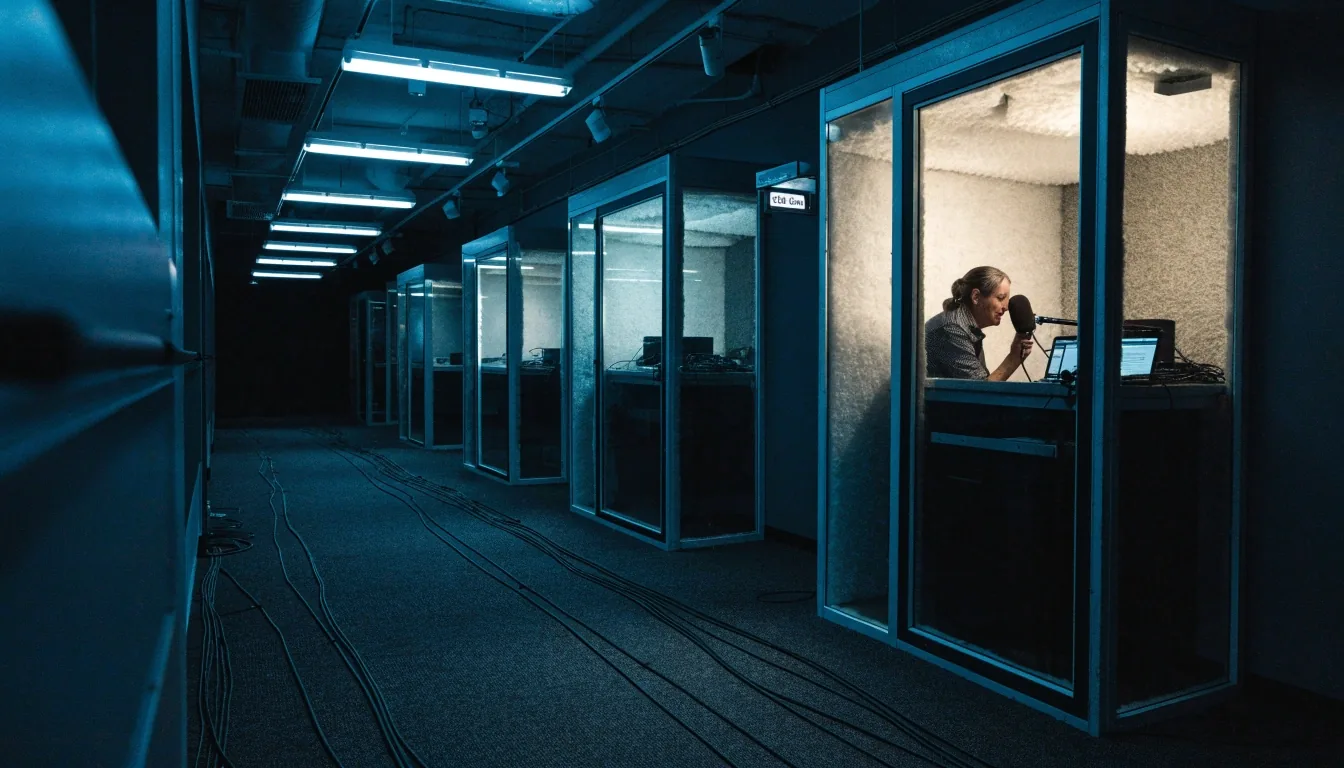
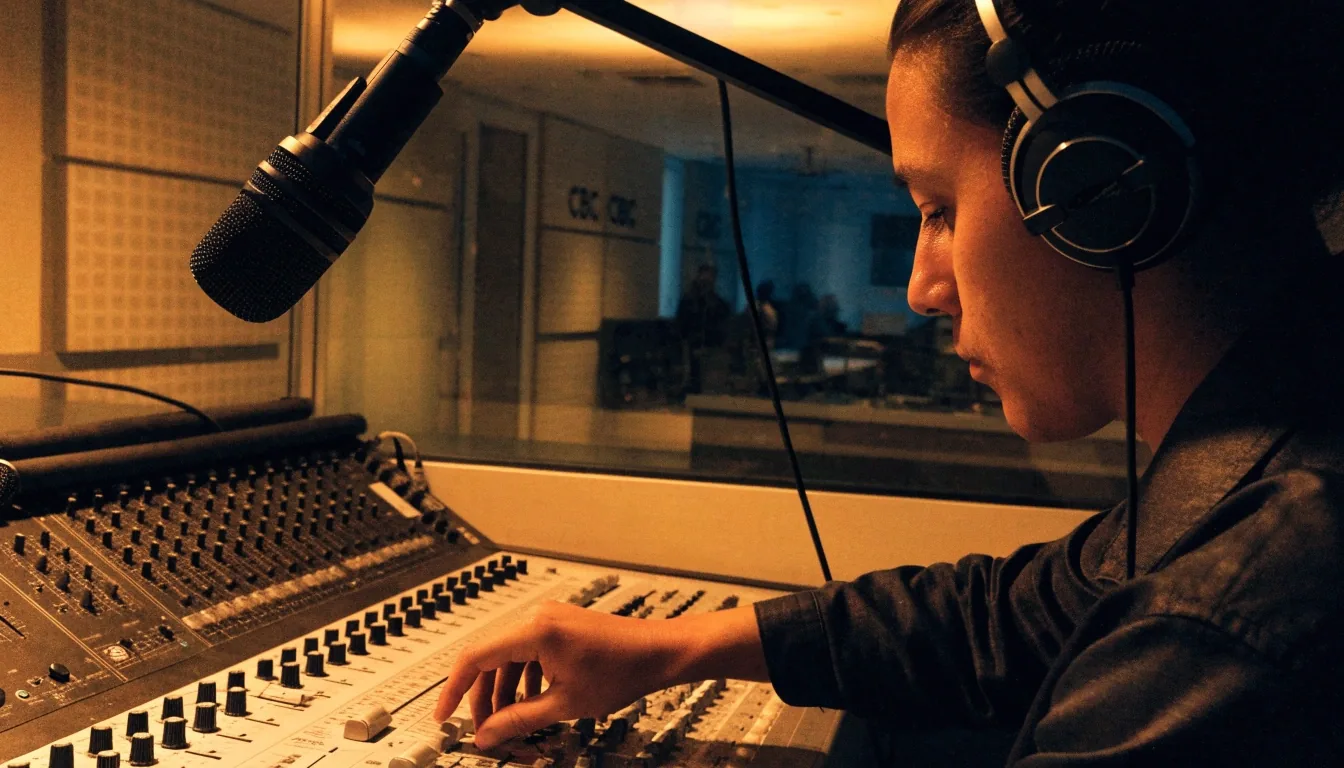
A radio booth is a small, acoustically treated room used for recording or live radio. It is quieter than a TV studio and often simpler to operate. There is no camera to frame, no lighting to set, no floor manager counting down from the side of the set. A reporter can walk into a booth, read a script, and be on air within minutes.
That speed is the point. A television broadcast is scheduled, planned and staffed well ahead of its slot. A radio item can respond to a developing story while the facts are still arriving, and a second item can replace the first inside the same hour if the story moves. The booth is small precisely because it does not need a studio's worth of room to do that job.
In practice a radio booth sits close to the newsroom floor so a producer can hand a reporter a script, listen to the read, and send the item out without crossing a building. That short distance between desk and microphone is what makes radio feel immediate to the listener at home.
Fast scripting is the whole job
Radio news depends on writing that can be read aloud the moment it is finished. An item may be written, read, and replaced within the same hour. The writing is built for the ear: shorter sentences, a clear structure, and no reliance on visuals to carry the meaning. Listeners cannot re-read a sentence, so the script has to land the first time.
Digital platforms and rolling updates
Digital news works on a different clock from either broadcast platform. A story can be published, updated, and republished as new information arrives, and there is no slot to wait for. Digital producers work from the same reporting as TV and radio, but they are not bound to a broadcast schedule.
That makes digital output the most continuous part of a newsroom's work. A page may go up with what is confirmed at the moment, then take on a correction, a new quote, or a fuller explanation as the reporting develops. For readers, that means the same story can look different an hour after it was first published, and it usually does.
Digital also carries the work that has no broadcast home: explainers, background, and the running detail that a three-minute radio item cannot hold. Where radio gives a listener the headline and the voice, the online version keeps the timeline open.
See how a story moves from field to air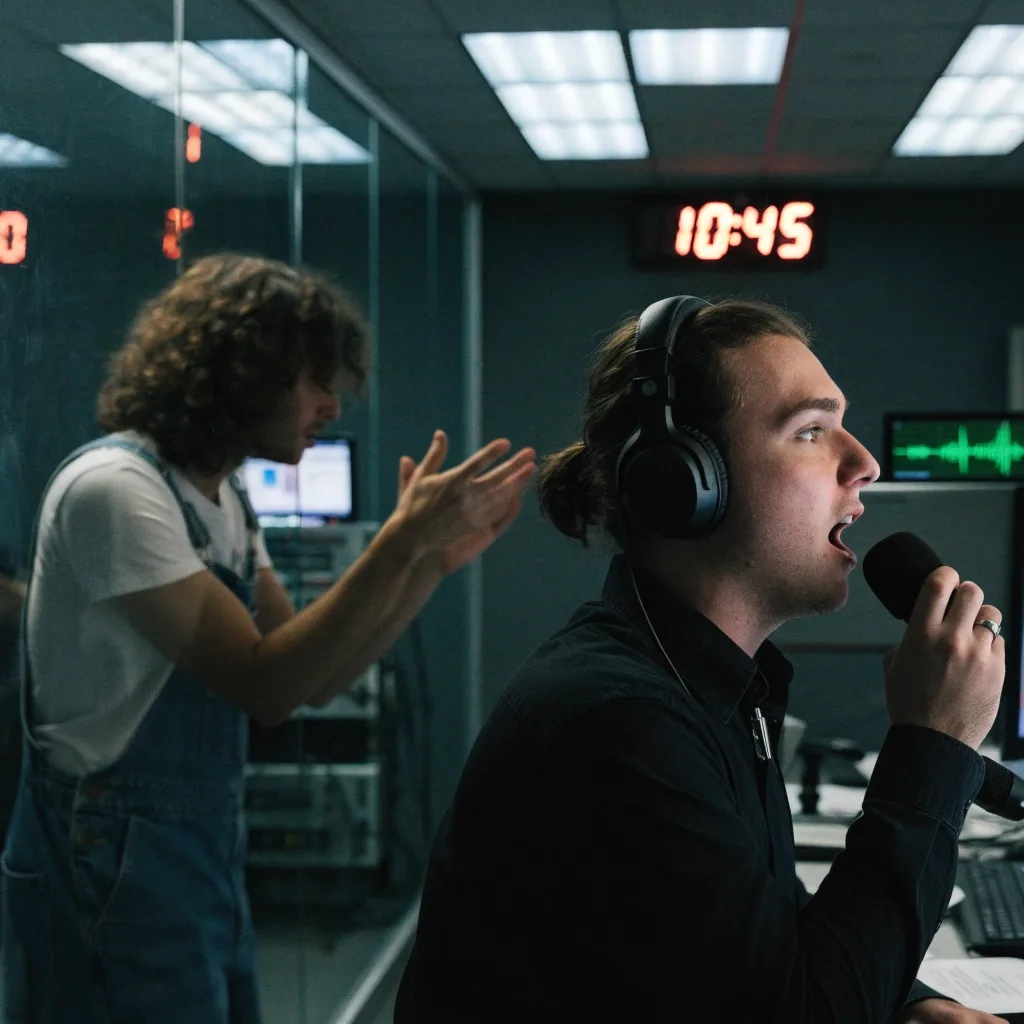
How the same reporting is reshaped
A single set of facts can become a TV live hit, a radio item, and an online article. The reporting is shared, but the format changes, and each format asks something different of the same material.
Television
Visuals and timing
A TV hit needs pictures that carry the story, a live feed, and a slot in the rundown that does not move. The reporter has to be in the right place at the right second.
Radio
Clear audio, tight writing
Radio needs a clean read, good interview audio, and writing that survives being heard once. Nothing on the page can lean on a picture to explain it.
Digital
Structure, headlines, updates
An online story needs a headline that works in a feed, a structure that lets a reader scan, and the willingness to keep rewriting as facts change.
The newsroom coordinates so that each platform gets what it needs without duplicating work. Nobody re-interviews the same source three times for three outputs when one strong interview can serve all of them.
Coordination across platforms
Coordination happens through the newsroom's planning and through direct communication between producers. It is less a formal handoff than a running conversation across desks.
In a smaller regional newsroom, that coordination happens faster because there are fewer people in the chain. One producer may file for radio in the morning, update the online story at midday, and hand material to a television colleague in the afternoon.
Why radio and digital matter to the whole operation
Television is expensive and scheduled. It needs a studio, a crew, and a fixed slot. Radio and digital are faster and more flexible, which makes them useful for breaking news and for audiences who are not watching television at that moment.
Keeping them inside the same newsroom means the reporting is shared rather than duplicated, and it means a story can reach audiences on several platforms in the same day. It also means a fact checked once is checked for everyone, instead of three teams chasing the same confirmation separately.
What stays the same across platforms
The fundamentals do not change. A story still needs to be verified, written, and edited. A live hit still needs a feed and a control room, whether it goes out on television or is carried by a radio network.
The vocabulary of the newsroom applies regardless of the output. Rundown, line-up, and field producer mean the same things on a radio desk as they do on a television desk, and someone moving between platforms in the same building usually recognises the job before they are taught the tool.
Read about the control roomQuestions readers ask about radio and digital news
Short answers to the things visitors most often want to know about how radio and digital fit into the same newsroom.
Does CBC Radio One News share a newsroom with CBC TV? +
Yes. CBC's facilities pages describe radio news and radio booths inside the same newsroom buildings as television production, which is why the reporting can be shared across outputs.
How is radio news different from TV news? +
Radio depends on fast scripting and clear audio rather than visuals, and it can respond to a developing story more quickly than a scheduled television broadcast. The script carries everything a picture would otherwise carry.
How do digital platforms fit in? +
Digital producers work from the same reporting as TV and radio but publish on a continuous schedule, updating stories as new information arrives. That is why the online version of a story can change several times in a day.
What does a radio producer actually do in a shift? +
A radio producer builds the line-up, commissions or edits scripts, books and cuts interview audio, and keeps an eye on what other platforms are confirming so the radio item does not contradict them. On a small team the same person may also write and read.
Keep reading the newsroom
This page is one chapter of an explainer on how a CBC newsroom operates. If you want to follow a story further through the building, the control room and the field production pages pick up where the radio booth leaves off. For questions about the material here, the editorial team can be reached through the contact page.
Editorial questions: Contact the editorial team · 250 Front Street West, Toronto, ON M5V 3G5, Canada · +1-416-205-3311 · Monday to Friday, 9:00 AM – 6:00 PM
Where this sits in the building