
Inside the Newsroom · Toronto Broadcasting Centre
How a CBC News broadcast studio works
An educational resource about the rooms, roles, and routines that turn reporting into a live newscast — written in plain language.
Start with the room you never see
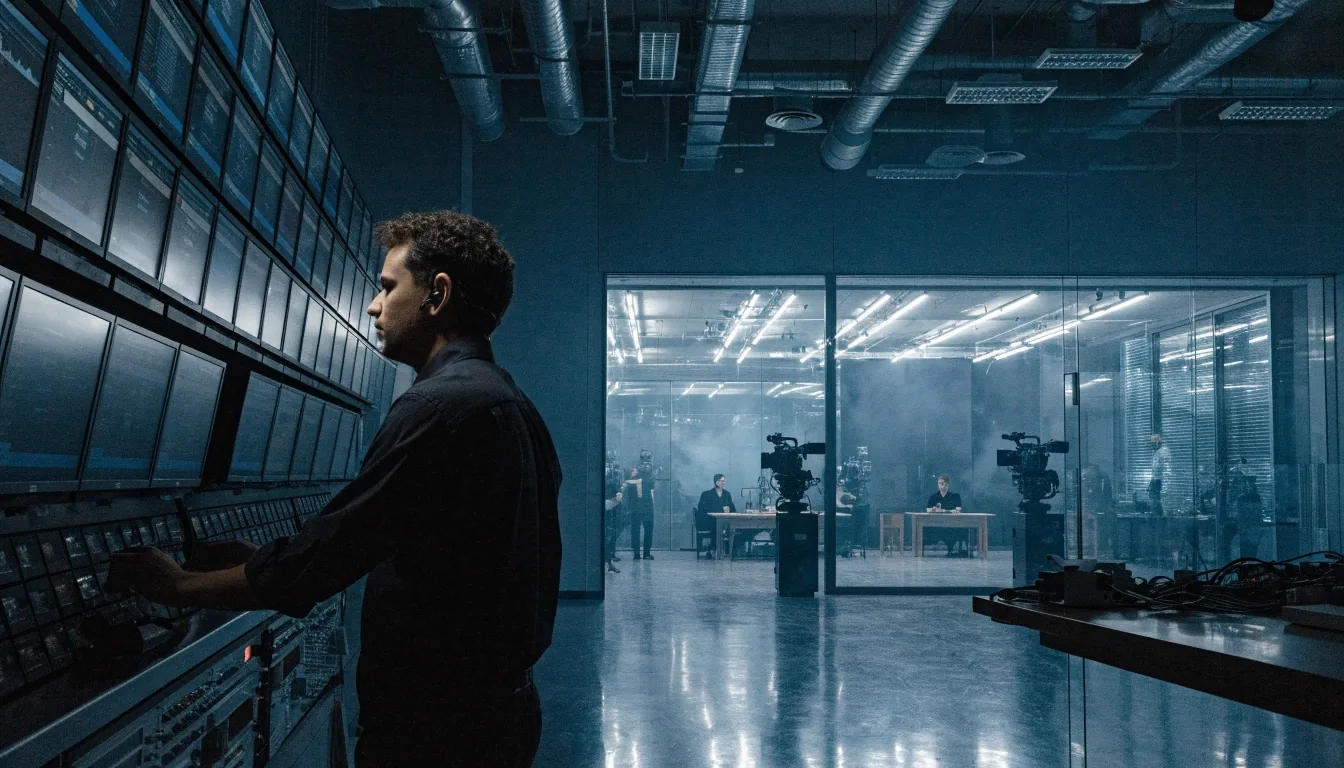
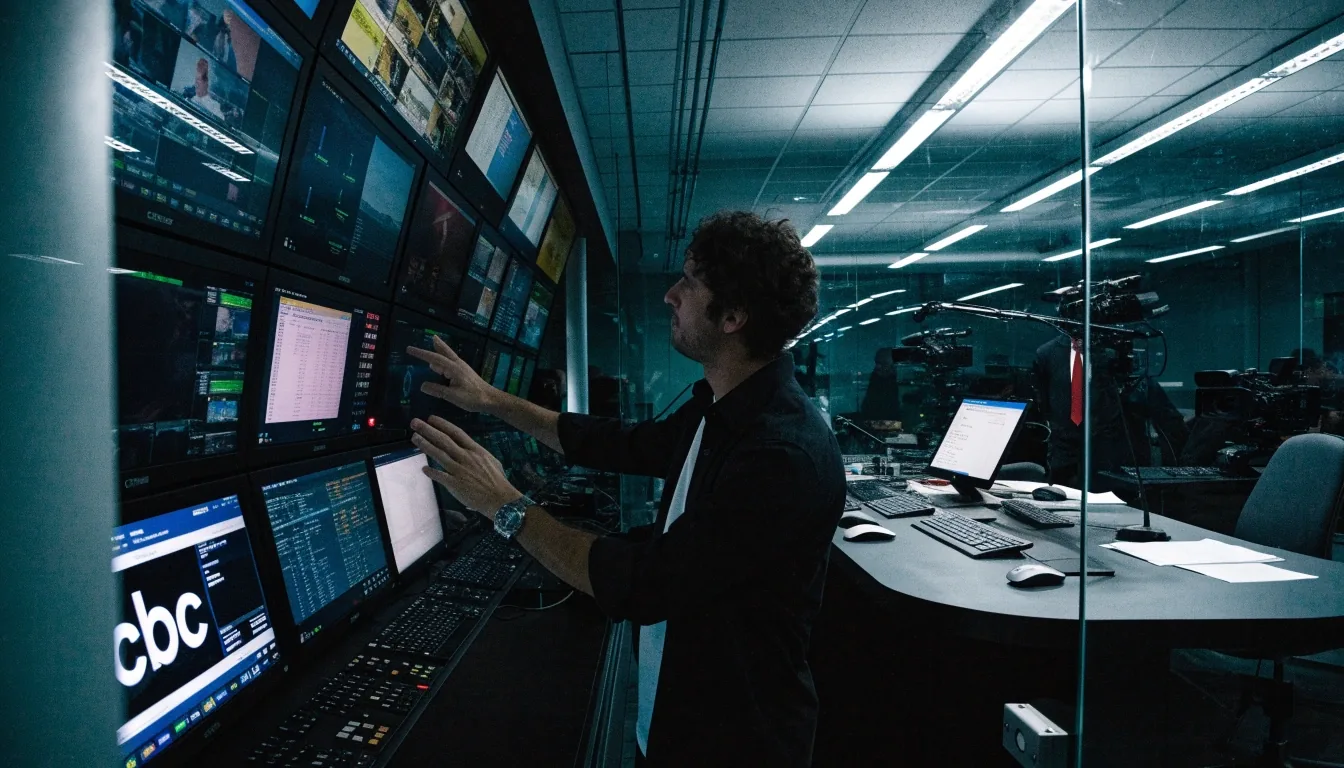
Most viewers know the anchor desk. Fewer know the control room behind it, where a producer calls the show and a director cuts between cameras. A CBC News broadcast is a coordinated effort between people you see on camera and a larger crew working off screen.
We begin here because the control room explains almost everything else: why a live hit starts on time, why a reporter pauses, why a graphic appears at a specific moment.
The rundown, as it tightens
to air
The three spaces people mix up
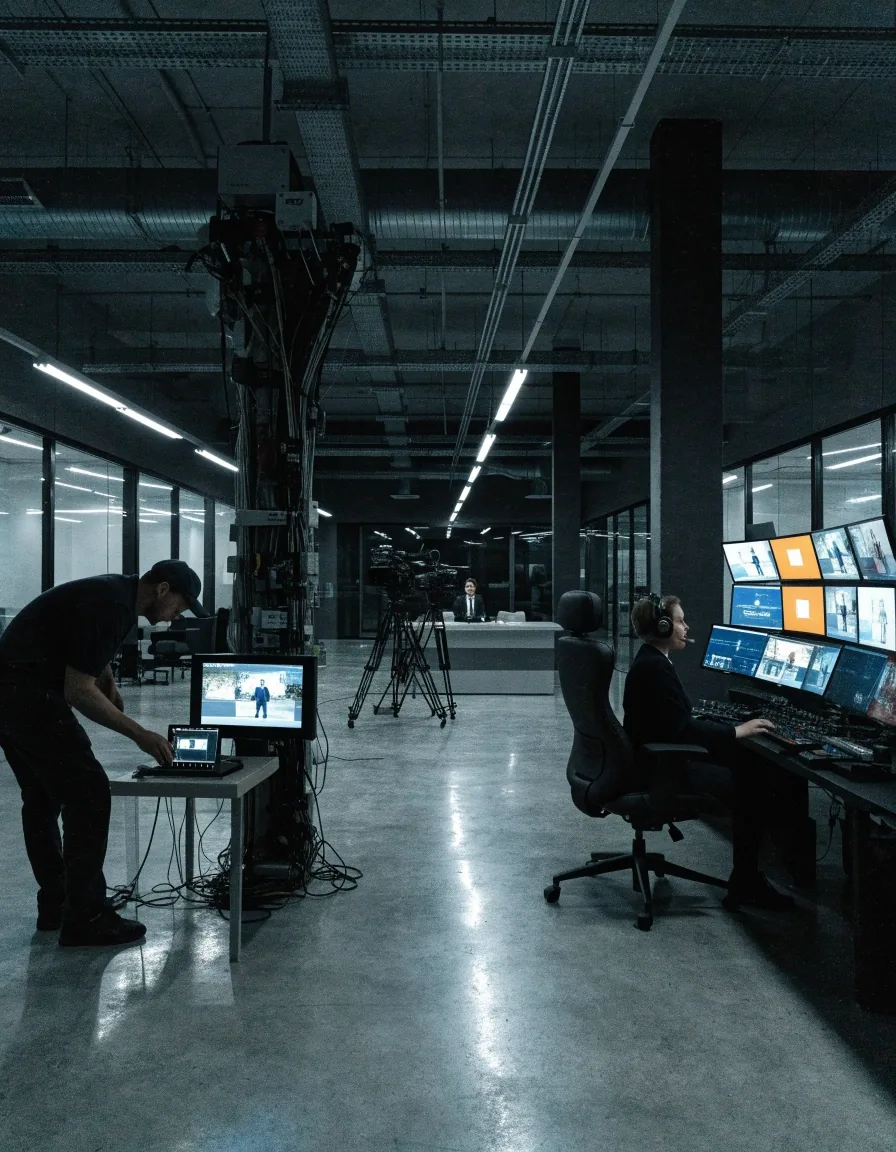
A newsroom is where journalists work, plan coverage, and write. A studio is the physical set where cameras and lights point at a host or anchor. A control room is where the broadcast is assembled and sent out. These three are usually in the same building, often on the same floor, but they do different jobs.
What a live hit actually involves
A live hit is a scheduled window when a reporter appears on air, usually from the field or a regional studio. Before that window opens, a field producer coordinates the location, a technician checks the signal, and the control room reserves a slot in the rundown.
The reporter often has less than two minutes to deliver the update. When it works, it looks effortless. When it doesn't, the anchor covers while the crew fixes the feed. That gap between the two is where most of the craft lives.
Regional newsrooms feed the national picture
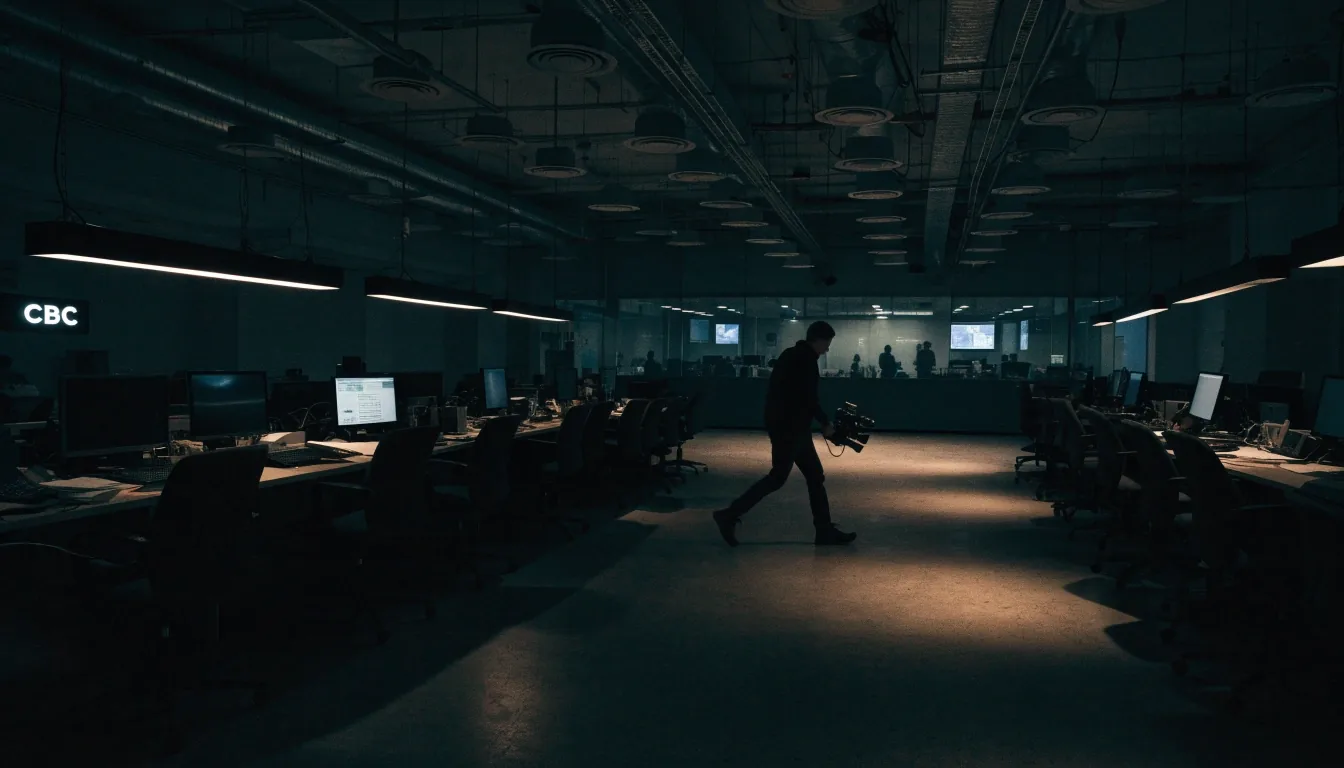
CBC News is not one building. Halifax covers Atlantic Canada, Edmonton and Calgary cover the prairies, Vancouver covers British Columbia, and Ottawa covers national politics. Each regional newsroom produces local TV, radio, and online reporting, and that reporting often travels to national programs.
A story that starts in a Halifax newsroom can end up on a national newscast the same day.
Hub line-up
Radio and digital share the same room
CBC Radio One News and CBC's digital platforms sit inside the same newsrooms as television. A radio booth may be a few steps from a TV set. A digital producer may publish a story while a broadcast is still on air.
The result is a newsroom where the same reporting is reshaped for different audiences throughout the day. The television script becomes a radio read, then an online piece, each cut to its own length and rhythm.
In the same room
A radio booth a few steps from a TV set; a digital producer publishing while the broadcast is still on air.
One reporting daySame reporting, reshaped
The television script becomes a radio read, then an online piece — each cut to its own length and rhythm.
TV → radio → online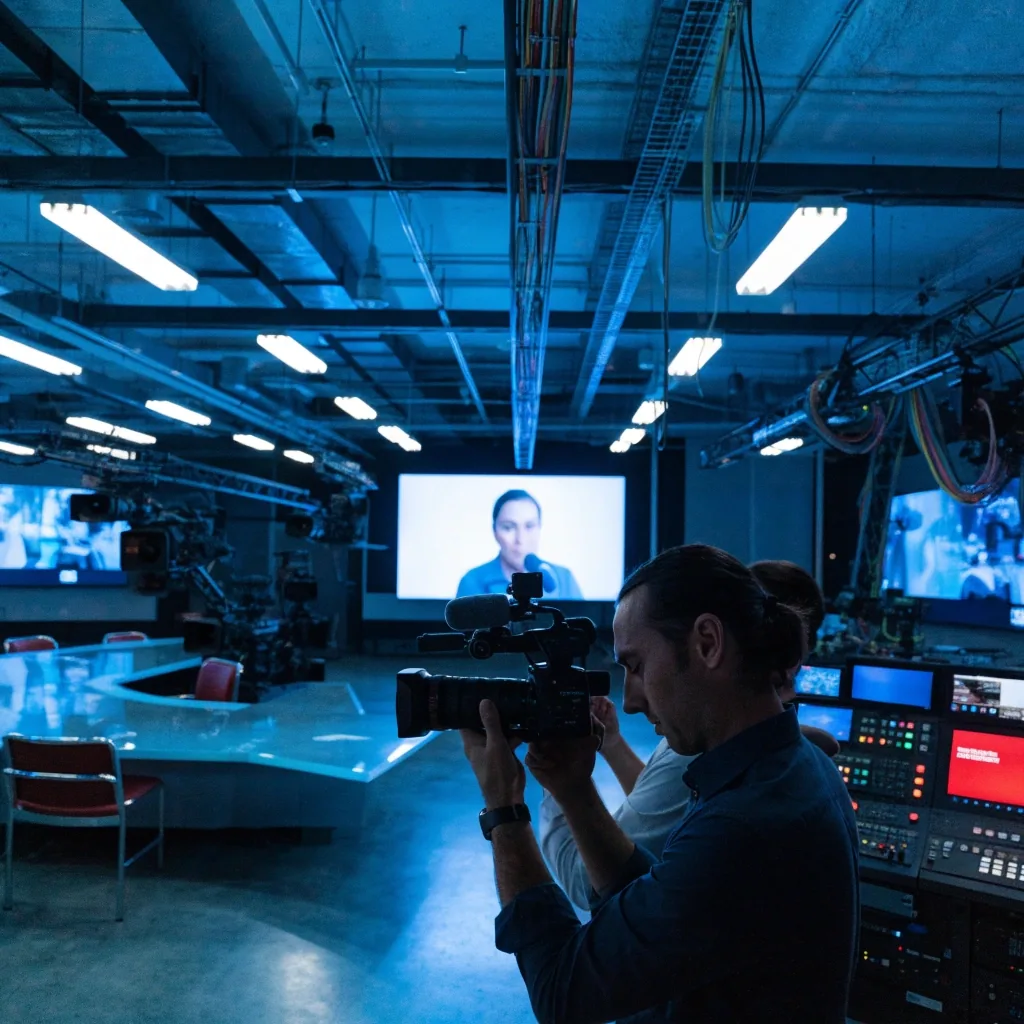
Where the buildings are
CBC's Toronto Broadcasting Centre at 250 Front Street West houses English-language radio and television networks, master control, and production spaces. The CBC Vancouver Broadcast Centre at 700 Hamilton Street is an integrated newsroom home to CBC News in BC, The National, and CBC Radio One in Vancouver.
CBC Ottawa's production centre handles English and French operations in the National Capital Region, and it is known for ground-level windows that let people on Sparks Street watch the newsroom at work.
Toronto
250 Front Street West
Vancouver
700 Hamilton Street
Ottawa
National Capital Region
Why this matters to a viewer
Understanding the machinery changes how you watch. You start noticing the cut to a second camera, the pause before a live hit, the moment an anchor turns to a different screen. None of it is accidental. A rundown, a line-up, and a crew of producers and technicians decide what happens, in what order, and for how long.
Behind the scenes, without the jargon: broadcast production has its own vocabulary, and it can be intimidating. We define terms as we use them — rundown, live hit, field producer, master control, sound stage, multi-camera production. The goal is that after reading a few pages, you can watch a newscast and follow what the crew is doing without needing a glossary open in another tab.
A note on accuracy
We describe how CBC News production generally works, based on publicly available information about CBC facilities and newsroom operations. Specific programs, sets, and workflows change over time.
Public informationWhat we do not cover
This site is not a job board, a press office, or a source of internal CBC documents. We do not publish proprietary rundowns, staff schedules, or security details. If you want to work in broadcast news, this site can help you understand the roles. It cannot get you hired or give you access to a working control room.
How to use this site
Each section of Inside the Newsroom goes deeper into one part of the operation. The control room page explains multi-camera switching and audio coordination. The studios page covers sound stages and anchor desks. The regional newsrooms page looks at Halifax, Edmonton, and Vancouver. The field-to-air page follows a story from reporter to broadcast.
Read them in any order, or start with the control room if you want the clearest single explanation of how a newscast holds together.
Questions visitors ask first
Short answers to the parts that come up most, before you head into the deeper pages.
How does a CBC News live broadcast move from the newsroom to air? open
Reporting is gathered in the newsroom, written into scripts, and placed into a rundown. The control room builds the broadcast from cameras, feeds, and graphics, and master control sends it out. Each step has its own team.
What is the difference between a newsroom, a studio, and a control room? open
The newsroom is where journalists work and plan. The studio is the set where cameras point at a host. The control room is where the broadcast is assembled and directed.
Where are CBC News programs actually produced in Canada? open
CBC produces news from multiple facilities, including the Toronto Broadcasting Centre, the CBC Vancouver Broadcast Centre, the CBC Ottawa Production Centre, and regional newsrooms in Halifax, Edmonton, and Calgary.
How do CBC's regional newsrooms fit into national coverage? open
Regional newsrooms produce local TV, radio, and online reporting. That reporting often feeds national programs, so a local story can reach a national audience the same day.
Where to go next
If you want the single most useful page, start with the control room. If you care about how local coverage reaches a national audience, go to regional newsrooms. If you are curious about the physical spaces, the studios page is the place.
If you have a correction or a question, the contact page reaches the people who maintain this resource.